
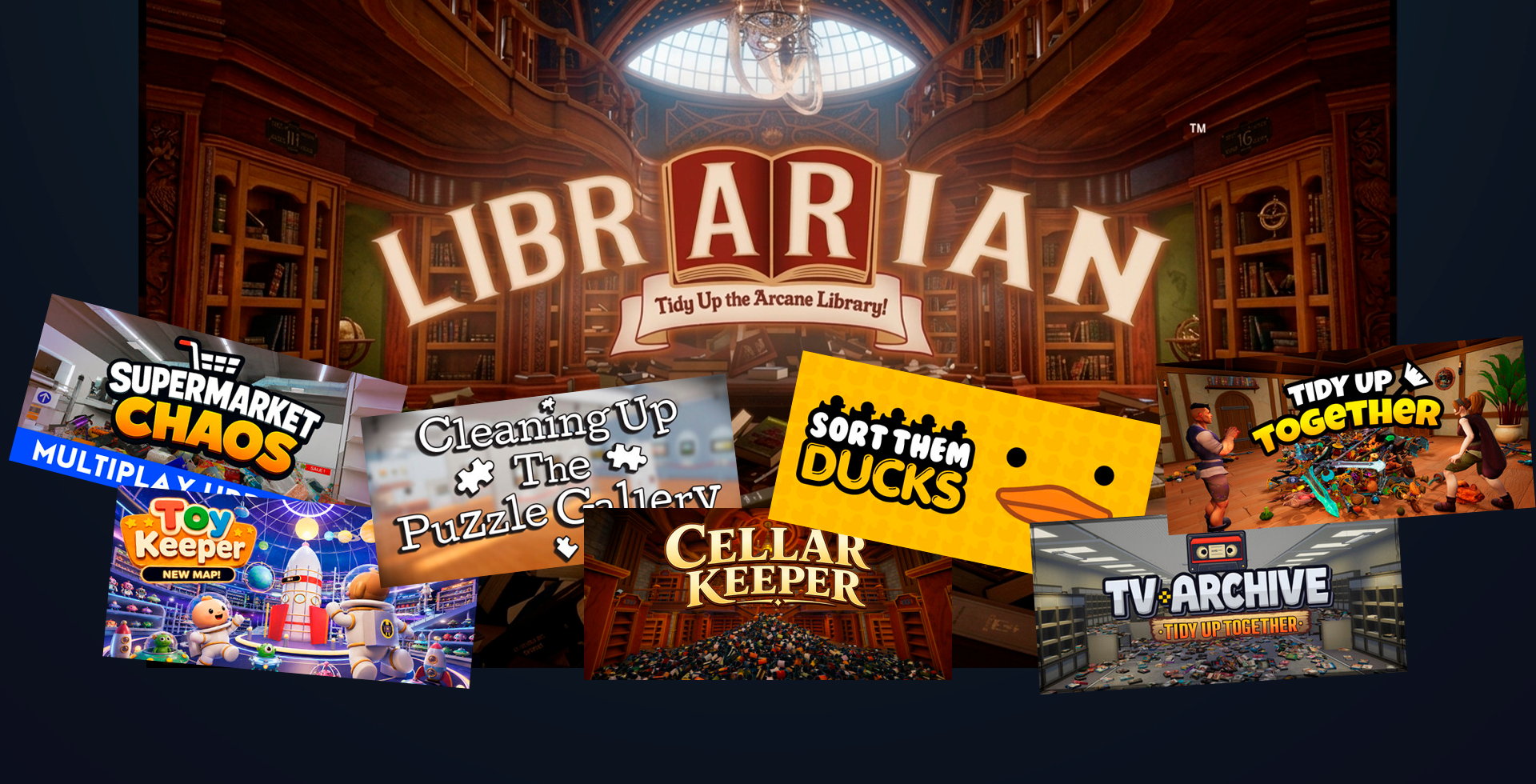
It all started as a casual joke with some friends. A few weeks ago, we were laughing about how, almost every week, a new game would pop up on Steam featuring the exact same core mechanic, just wrapped in a different theme.
The game that sparked this whole craze is Librarian: Tidy Up the Arcane Library.
What really blows my mind about this game is its origin. It wasn’t backed by a huge marketing budget or a massive publisher; it was made by a tiny Japanese studio of just two people. When I dug into their pre-launch marketing, I barely found anything, maybe just few posts back in February. Yet, when it launched on April 30, 2026, it didn’t just succeed; it accidentally created an entire subgenre overnight.
Today I want to share a sales analysis (with data extracted from Gamalytics), not about Librarian itself, but about what happens after the smash hit: the clone phenomenon, the window of opportunity, and why being late to the party can cost you dearly.
The Titan and the Sales Abyss
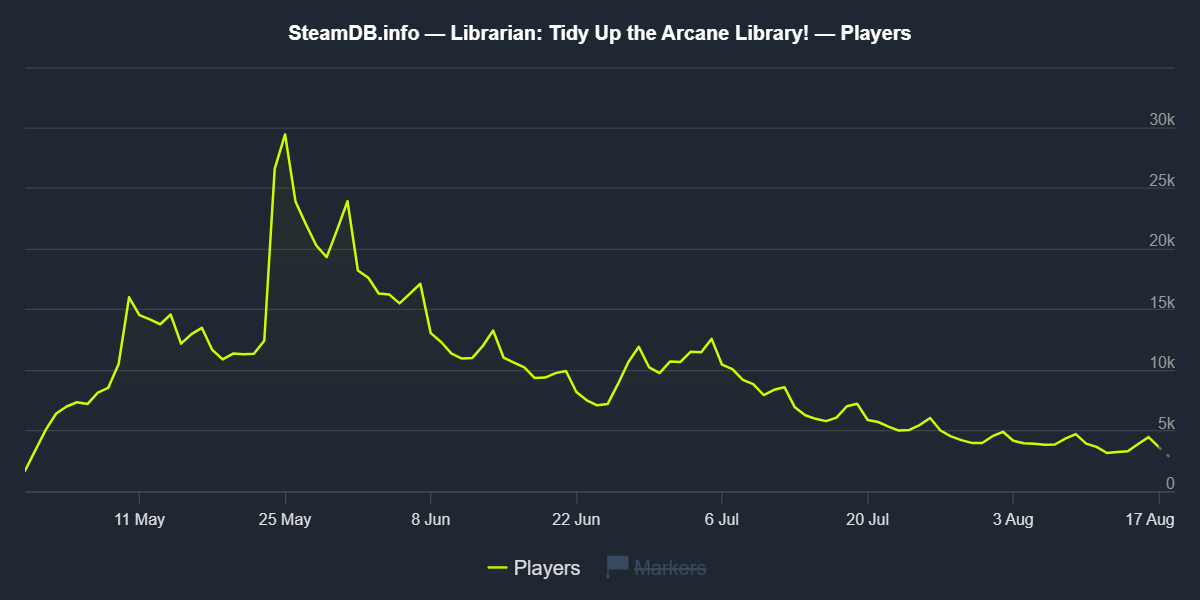
To give some context, Librarian currently sits at 1.5 million copies sold. Looking at its history, the game had two massive peaks of concurrent players on May 10 and May 25, coinciding with its viral explosion and a discount sale.
This is where I want you to see the brutal difference between being the trendsetter and riding the slipstream.
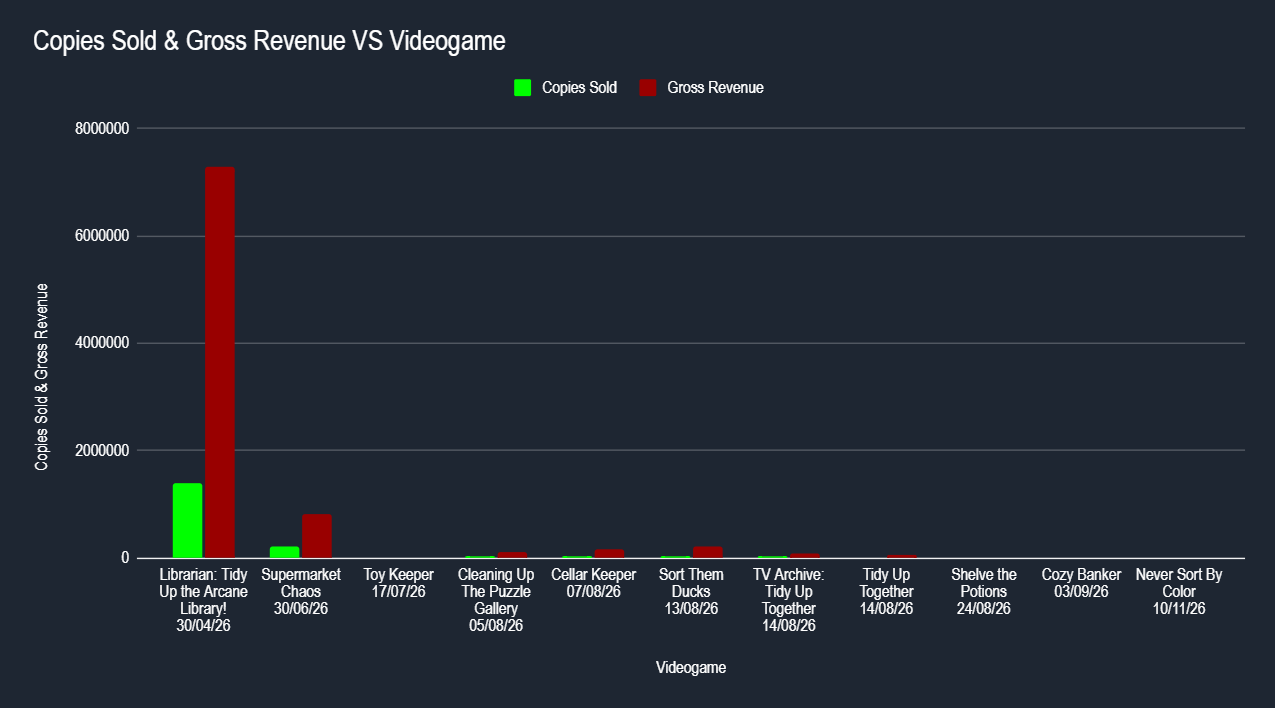
As you can see in the graph, the drop in sales between the original game and the rest isn’t a step; it’s a cliff. But beware, because «selling much less than the original» doesn’t always mean failure.
«Fast-Dev» and the Success of Supermarket Chaos
This is where the story gets interesting. The first game that managed to successfully ride the Librarian wave was Supermarket Chaos, developed by the studio BunnyHop. It was published on June 30, exactly two months after the original.
If you know how Steam works, you know you need at least 1 month from the time you create your store page until you can actually sell the game. This means the folks at BunnyHop saw the viral peak, reacted at lightning speed, and put the game together in practically a matter of weeks.
The result? They have sold about 207.700 copies. Obviously, they are lightyears away from the 1.5 million of Librarian, but let’s put it in perspective: it’s the first game from a small studio, developed in less than two months. In indie development, that is a resounding success and probably a massive injection of oxygen that ensures the studio’s survival for years.
The Chronology of Decline
But the window of virality closes as fast as it opens. I’ve analyzed the rest of the copies that have been coming out since then in chronological order, and the pattern is textbook.
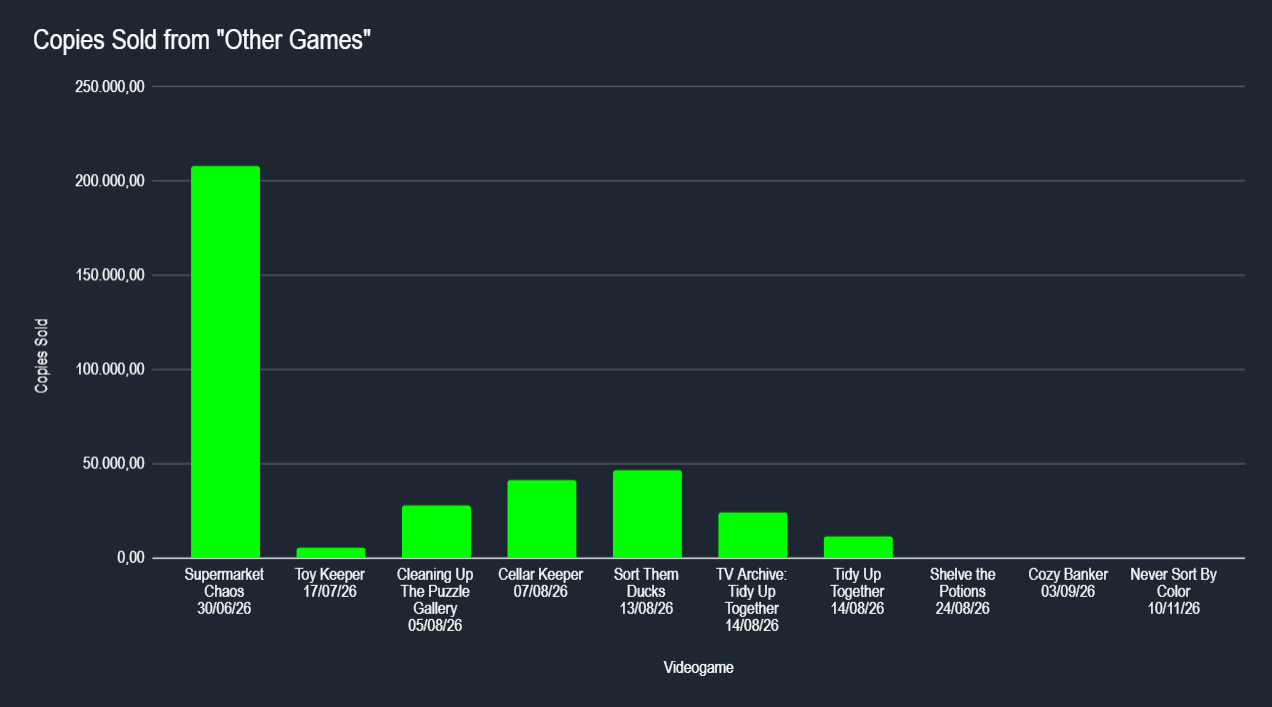
With every passing week, public interest plummets. Although the first few clones scraped together decent sales that could keep the lights on for small studios (making a cheap game in a couple of months and selling a few thousand copies pays off), the current reality is very different. We are almost 4 months past the release of Librarian, and there are studios that are just now announcing their own clone. By the time they release it, the wave will have already crashed on the shore.
Final Thoughts: The Two Sides of the Coin
All this madness leads me to two main conclusions about how our industry works.
1. The small window of opportunity: If you are a small studio, have little to lose, and are fast, cloning a viral hit (while adding your own theme) can be a financially valid strategy. But you have to act quickly and keep costs low. If you spend two months just thinking about it, you’re dead.
2. The magic of surprise cannot be cloned: Never, ever expect your clone to come close to the sales of the original. Why? Because what makes a game sell 1.5 million copies isn’t just the mechanic, it’s the surprise. Human beings are fascinated by the unexpected. When you play a copy, the surprise factor no longer exists; you are just looking to repeat a familiar feeling.
This brings me to a final thought on game design. The creators of truly unique games like Librarian rarely get inspired by playing other video games. They look for inspiration outside: in everyday things, in mundane tasks, in weird hobbies, or in books.
That is why it is so crucial for us developers to turn off the computer from time to time and go out to do things that have absolutely nothing to do with video games. It is in that disconnection, in that friction with the real world, where the brain makes the creative connections that end up creating the next million and a half sales.
Want a deeper dive? If you are interested in this kind of phenomenon, I highly recommend checking out Chris Zukowski's excellent analysis on Vampire Survivors and the waves of games that followed it (The Cycle of a Hit Genre). He shows how the real subsequent hits often come much later in the cycle, once developers start making good, significant variations rather than just 1:1 copies. Looking at his research, we might just be in the "early almost-clone" phase of Librarian, and the true, innovative successors are still yet to come!